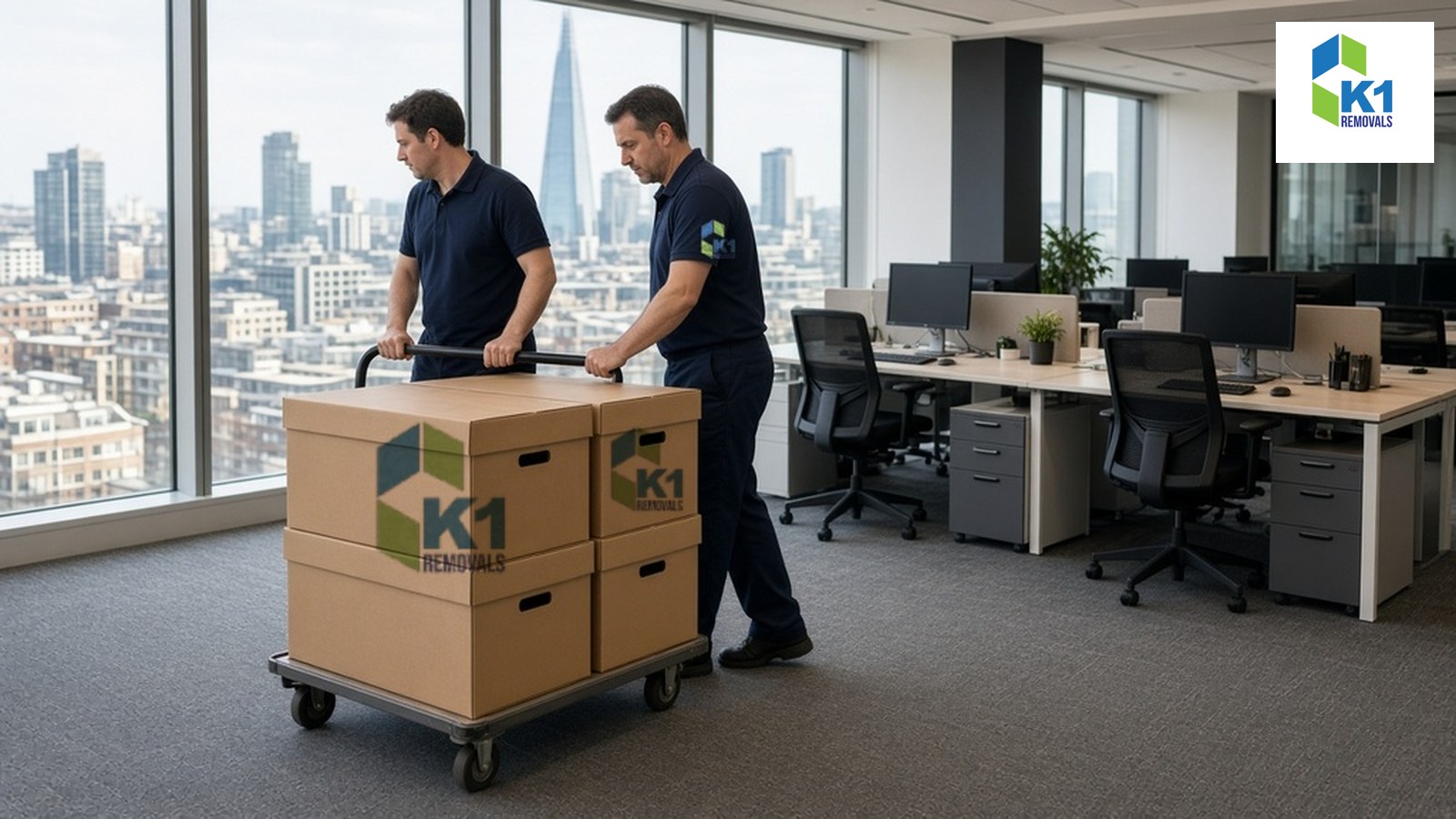
Most office moves in London don’t fail because of the packing. They get delayed at the loading bay. Managed office buildings, serviced offices and shared workspaces all have rules about when and how you can move in or out. If you don’t plan for them, you can find your crew waiting on the pavement while the lift is booked by someone else.
This guide covers the building side of an office move. For the full planning timeline, see our office moving checklist.
Speak to building management first

As soon as you know your move date, contact the building manager or facilities team at both your current and new buildings. Ask them:
- Which days and times are moves allowed? Many buildings only allow moves in the evenings or at weekends.
- Is there a loading bay, and how is it booked?
- Is there a goods lift, what are its dimensions and weight limit, and can it be reserved?
- What documents do they need from your removal company, and by when?
- Are there rules on floor and wall protection, noise or access to shared areas?
- Is there a security or concierge desk the crew needs to check in with?
Get the answers in writing and share them with your removals company.
Documents the building will probably ask for
RAMS (Risk Assessment and Method Statement)
Most managed buildings ask for a RAMS before approving a move. It explains:
- the route from the loading bay to your office;
- the equipment used, such as crates, trolleys and dollies;
- how floors, walls, doors and lifts will be protected;
- how many crew will be on site and who is in charge;
- how risks like heavy lifting and blocked fire exits are managed.
Your removal company should prepare it for you.
Insurance certificate
Buildings usually want a copy of your removal company’s public liability insurance certificate, so damage to common areas is covered. Some also ask for employer’s liability and goods-in-transit cover. Send them early – late paperwork is one of the most common reasons a move slot gets cancelled.
Contractor details
Expect to provide a list of crew names, vehicle registrations and a contact number for the person in charge on the day.
Loading bays, parking and vehicle access
Central London buildings often have small loading bays with height limits, shared with deliveries and other tenants. Check:
- the maximum vehicle height and length;
- how long you can keep the bay;
- whether you need a parking suspension on the street instead.
If there’s no loading bay, you may need to suspend bays on the street through the local council. Each council has its own process and notice periods – our guide to parking suspensions in London explains how it works. Remember that parts of central London are inside the Congestion Charge zone and the ULEZ, which affects vehicle costs.
Lifts and protection
Goods lifts are the bottleneck of most office moves. Book them for long enough at both buildings, and check they’re big enough for desks, cabinets and server racks. If there’s no goods lift, ask whether a passenger lift can be protected and reserved.
Expect the building to insist on:
- lift protection – padded covers on the lift walls;
- floor protection – boards or sheeting along the route;
- door and corner protectors in corridors.
IT, data and disposal

- Ask your IT team or provider to plan disconnection, moving and reconnection of computers, phones and network equipment.
- Label every cable and device with its new desk position.
- Pack servers and sensitive equipment separately, or have your IT provider move them.
- Dispose of old electrical equipment through a licensed recycler under the WEEE regulations, and make sure hard drives are securely wiped or destroyed first. Keep the certificates in case anyone asks how the data was handled.
Out-of-hours moves
Moving in the evening or at the weekend means:
- less disruption to your team and other tenants;
- free lifts and loading bays;
- quieter roads.
It does need planning, because security staff must be on site and some buildings charge for out-of-hours access. Confirm this with building management when you book.
On the day
- Have someone from your company on site at each building.
- Make sure the crew can check in with security quickly.
- Walk the route with the building manager before and after the move, so you both agree there’s no damage.
- Have a floor plan with desk numbers at the new office, so crates go straight to the right place.
Frequently asked questions
What is RAMS and why does my building want it?
RAMS stands for Risk Assessment and Method Statement. It sets out how the move will be carried out safely – the route through the building, equipment used, protection, crew and timings. Many London building managers won’t approve a move without it.
Why does building management want my removal company’s insurance certificate?
Buildings want to know that any damage to common areas, lifts or other tenants’ property is covered. They usually ask for a copy of the removal company’s public liability insurance before they’ll book the move.
Can we move office at the weekend or overnight?
Often, yes. Many buildings prefer or insist on out-of-hours moves so the lifts and entrances are free for other tenants during the working week. Book the slot with building management early.
How should we dispose of old IT equipment?
Electrical waste should go through a licensed recycler under the WEEE regulations, and any device that holds data should be securely wiped or destroyed first, with a certificate for your records.
Do you handle small office moves?
Yes. K1 Removals specialises in small and medium office moves across London.
Office removals with K1 Removals
K1 Removals moves small and medium offices across London, working with building management to plan loading, lifts and protection. Find out more about our office removals, packing services and storage for furniture and archive boxes.
Planning an office move? Get a free quote or call 0330 103 0041.