

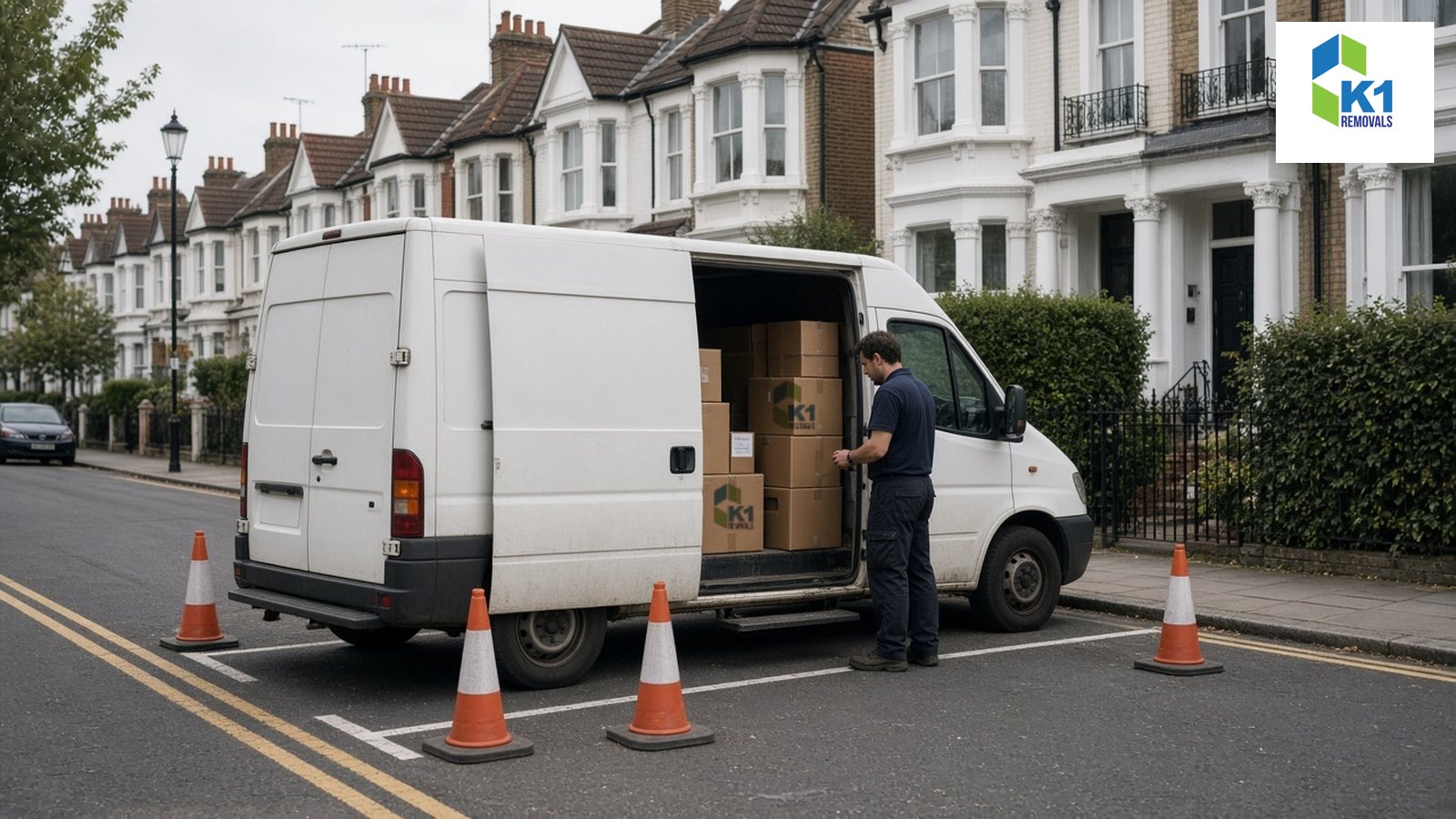
Ask any London removals crew what makes or breaks a moving day and most will say the same thing: parking. A van parked right outside your door means a faster, safer, cheaper move. A van parked two streets away means extra time and effort, and a higher risk of damage.
This guide explains how parking suspensions work in London, what to check with your council and how to plan ahead. Each of London’s 32 boroughs and the City of London runs its own parking service, so the details differ. Always confirm with your council directly.
What is a parking suspension?
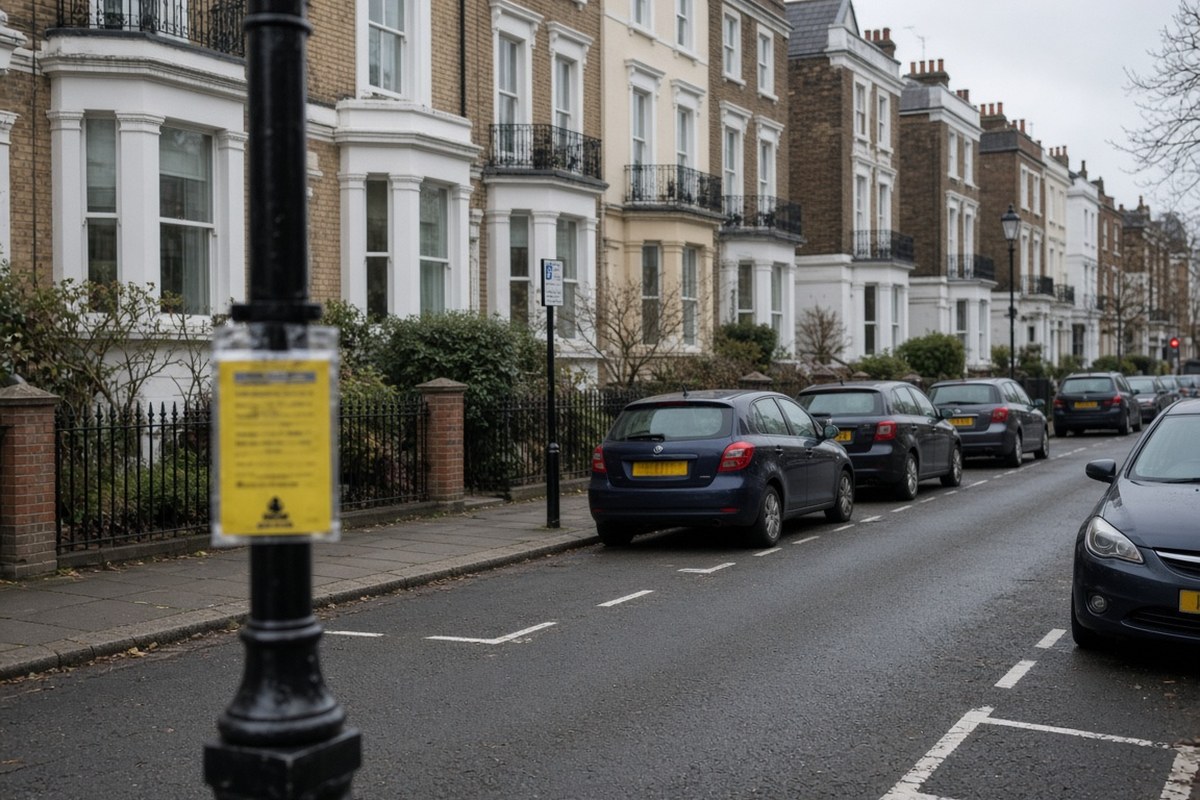
A parking suspension temporarily reserves one or more parking bays (residents’, pay-and-display or shared-use) for a specific purpose and time, such as a house move. The council puts up signs in advance warning other drivers not to park there.
Some councils also offer dispensations or waivers, which allow a vehicle to park or load somewhere it normally couldn’t, for example on a single yellow line during controlled hours.
Do you need one?
You probably do if:
- your street has controlled parking (residents’ bays or pay-and-display)
- spaces are usually full during the day
- the removal vehicle is large or you expect a long loading time
You might not need one if you have a private drive, an off-street loading area, or a building with its own loading bay. Check the building’s rules if you live in a block of flats.
What to check on your council’s website
Search for your borough name plus “parking suspension”. Then look for:
- Who can apply. Residents, contractors, or both.
- Notice period. How many working days ahead you must apply.
- Fees. Usually an admin fee plus a charge per bay per day, and these vary between councils.
- How many bays. A large removal vehicle often needs more than one standard bay.
- Times. Whether the suspension covers the whole day or set hours.
- Red routes and main roads. These are managed by Transport for London (TfL), not the borough, so different rules apply.
West London: what we see most
We regularly work across West London, including Hounslow (Chiswick, Brentford, Isleworth), Ealing (Ealing, Acton), Hammersmith & Fulham (Hammersmith, Fulham, Shepherds Bush, White City), Kensington & Chelsea, Wandsworth (Putney, Wandsworth) and Richmond upon Thames (Richmond, Barnes).
Each has its own process and lead time. Busy residential streets in places like Chiswick, Fulham and Kensington are where early applications matter most.
Remember: you may need parking at both ends
It’s easy to arrange the collection address and forget the delivery address. If you’re moving between two controlled streets, possibly in different boroughs, you may need two applications under two different sets of rules.
Tips for a smooth parking arrangement
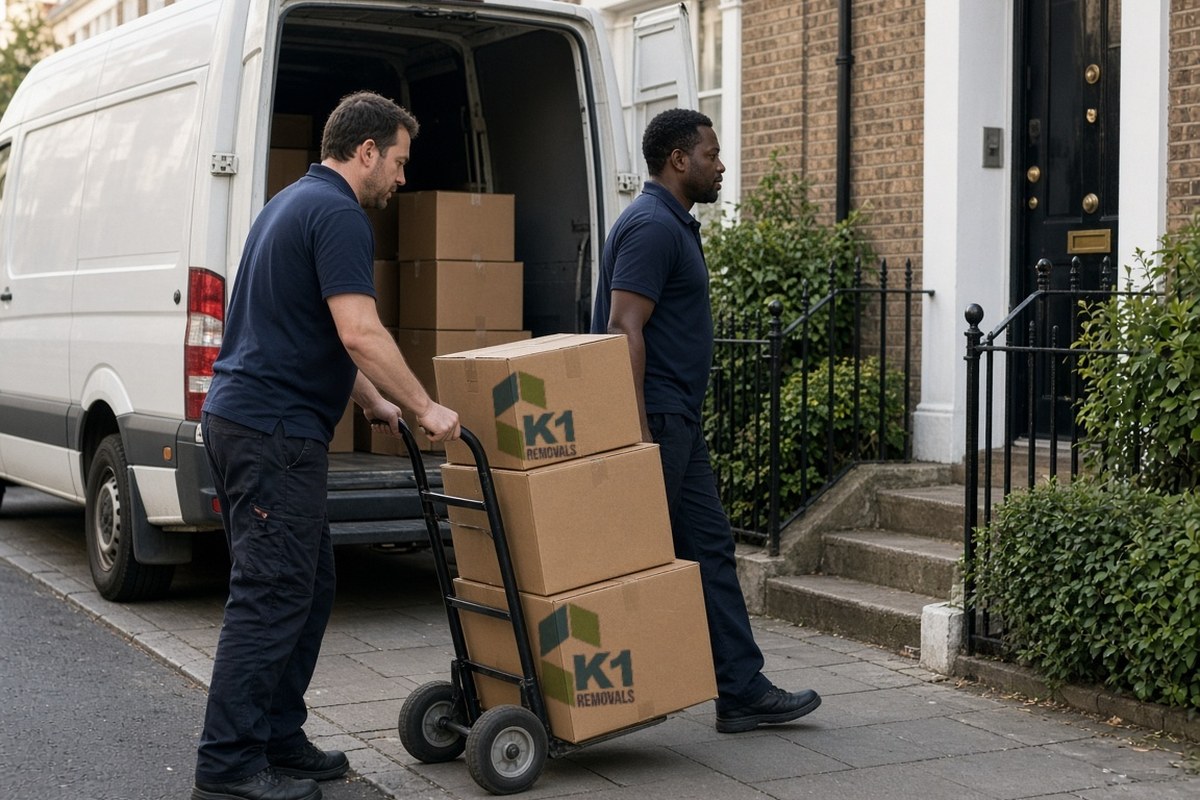
- Apply as soon as your date is confirmed. If completion dates are uncertain, check the council’s policy on changing or cancelling.
- Measure up. Tell your remover about width restrictions, low trees, height barriers and tight corners.
- Talk to neighbours. A friendly note a few days before goes a long way.
- Book lifts and loading bays with building management for flats.
- Keep the council’s contact details handy on the day in case someone parks in the bay.
- Consider the time of day. School runs and rush hour affect access and loading.
What if you can’t get a suspension?
Sometimes applications are refused, or the date is too close. Options include:
- loading from the nearest legal space and allowing extra time
- using a smaller vehicle with more trips, where appropriate
- an early start before restrictions apply, if access and noise rules allow
Your remover should be able to advise. This is exactly the kind of local detail a London-based team deals with every week.
A simple moving-day parking timeline
- As soon as you have a date: check both councils’ websites and agree who will apply.
- Within the notice period: submit applications and pay any fees.
- When signs go up: check they’re in the right place and showing the right date, and photograph them.
- The day before: knock on a few doors to remind neighbours.
- On the day: have the council parking contact details ready, and keep a cone or a person in the space until the vehicle arrives, where that’s allowed.
Frequently asked questions
Do I need a parking suspension to move house in London?
Not always, but on many controlled streets you’ll need one to guarantee a legal space for the removal vehicle. If you have a private drive or off-street loading area, you may not.
How far in advance should I apply?
Each council sets its own notice period, so check your borough’s website as soon as you have a moving date. Applying early gives you the best chance of approval and allows time for signs to go up.
Who applies, me or the removals company?
It varies. Some councils accept applications from residents, others from contractors, and some from either. Agree with your remover who is responsible so it doesn’t fall through the gaps.
What if a car is parked in the suspended bay on the day?
Contact the council’s parking team using the details given on the suspension notice. Some councils can relocate or ticket vehicles parked in suspended bays.
Let us help plan your move
At K1 Removals we’ll talk through parking and access when we survey your move. We’ll also be clear about who’s arranging what, so nothing is left to chance. See our house moves service or browse the areas we cover.
Planning a London move? Get a free quote or call 0330 103 0041.