
Good packing makes moving day faster, safer and far less stressful, both for you and for your removal crew. Bad packing (overfilled boxes, loose items, no labels) slows everything down and puts your belongings at risk.
Here are the tips our team relies on, room by room.
What you’ll need
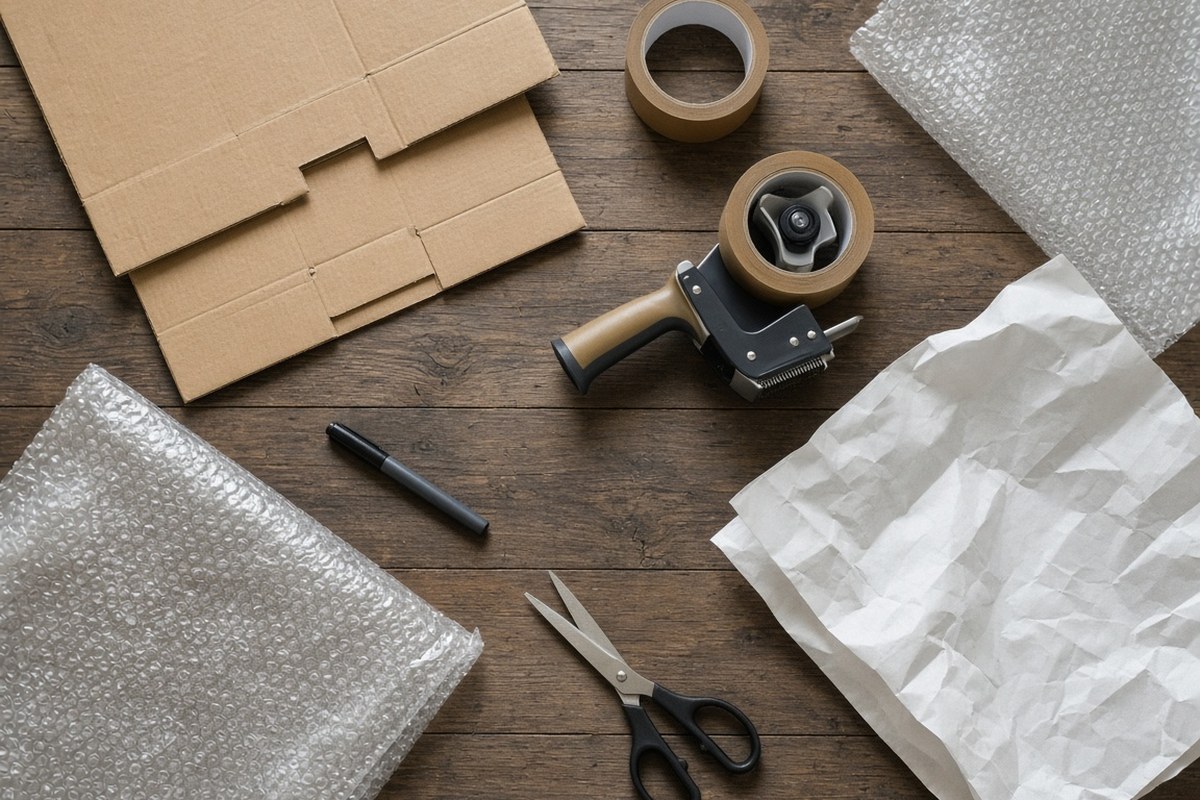
- Strong boxes in small, medium and large sizes. Small boxes are for heavy things, large boxes for light things.
- Packing paper (clean, unprinted) and bubble wrap for fragile items
- Good-quality packing tape and a tape dispenser
- Marker pens for labelling
- Wardrobe boxes for hanging clothes
- Mattress and sofa covers
- Sealable bags for screws and fittings
The golden rules
- Heavy items in small boxes, light items in large boxes. A large box of books is too heavy to carry safely.
- Fill gaps. Boxes should be full and firm, with no rattling. Use paper, towels or linen as padding.
- Tape properly. Tape the bottom and top seams, plus across the edges for heavy boxes.
- Label two sides, with the room and a short contents list. Mark fragile boxes clearly.
- One room at a time. It keeps you organised and makes unpacking simpler.
- Keep a box list. Numbering boxes helps you spot if anything is missing, and it’s essential for international moves.
Kitchen
The kitchen usually takes the longest, so don’t leave it until last.
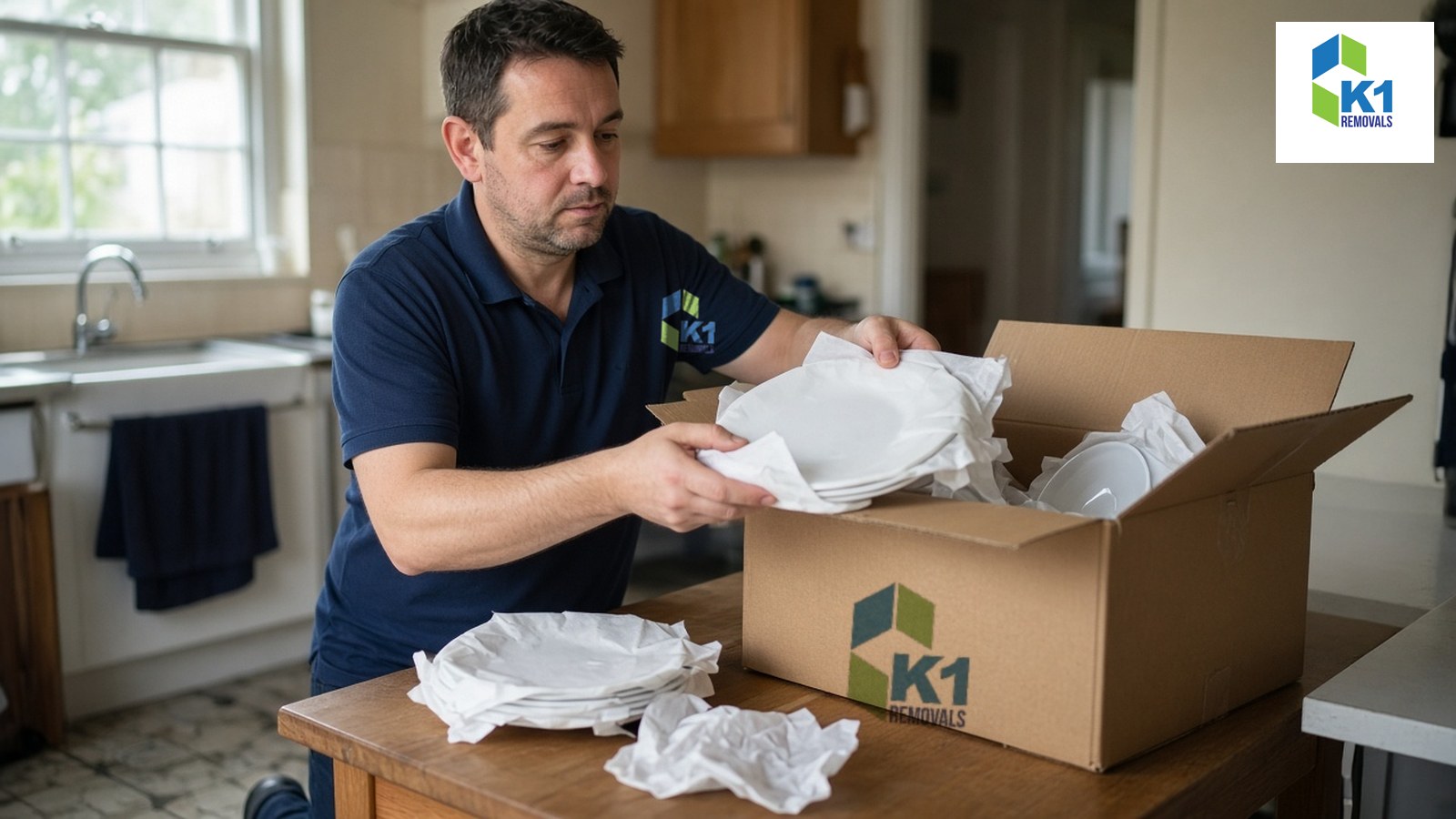
- Wrap plates individually and stand them on edge, like records.
- Wrap glasses individually and pack them upright with padding between.
- Pack pots and pans together, with smaller items nested inside.
- Tape down or bag loose lids, and wrap knives securely.
- Use up or give away open food and liquids. Don’t pack anything that could leak.
- Defrost and dry the freezer at least 24 hours before moving.
Living room
- Photograph cable set-ups behind TVs and computers before unplugging.
- Pack TVs in original boxes if you have them, or ask about protective wrapping.
- Wrap picture frames and mirrors in paper and bubble wrap, and mark them “fragile – this way up”.
- Pack books flat or spine-down in small boxes.
Bedrooms
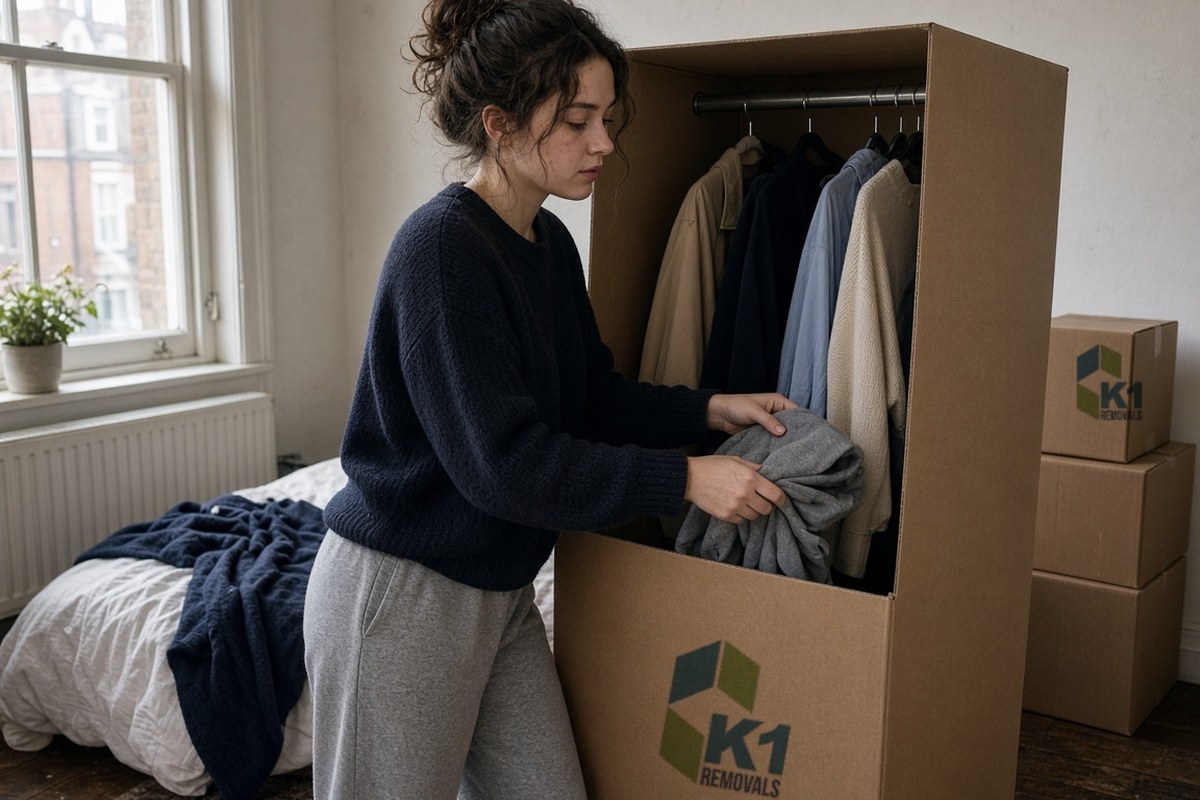
- Use wardrobe boxes for hanging clothes so they arrive ready to hang.
- Vacuum-pack bulky bedding and out-of-season clothes to save space.
- Bag up bed bolts and fixings, label them and tape them to the frame.
- Ask before leaving anything in drawers.
Bathroom
- Tighten lids and put toiletries in sealable bags.
- Keep medication with you, not in the van.
- Pack a separate bag of essentials for the first night.
Home office
- Back up computers before moving.
- Keep important documents (passports, contracts, completion papers) in a folder that travels with you.
- Pack files in small, strong boxes, as paper is heavy.
Garage, garden and shed
- Drain fuel from lawnmowers and other machinery.
- Don’t pack paint, gas bottles, aerosols or other flammable or hazardous items. Use them up or dispose of them safely.
- Clean garden furniture and tools, which is especially important if you’re moving abroad, for example to Australia.
The “open first” box
Pack one clearly marked box for each person that travels with you or goes last onto the van:
- kettle, mugs, tea and coffee
- phone chargers
- toilet roll, soap and towels
- a change of clothes and night things
- basic tools and scissors
- snacks and bottled water
- bedding for the first night
Things to keep with you on moving day
- keys, passports and ID
- moving and completion paperwork
- medication
- jewellery and valuables
- laptops and hard drives
Common packing mistakes
- Overfilling large boxes so they’re too heavy to lift or burst at the bottom.
- Under-filling boxes so they crush when stacked.
- Using carrier bags and bin bags for anything fragile or heavy.
- Forgetting to label, so every box ends up in the hallway.
- Packing the kettle before you’ve finished the last cup of tea.
- Leaving the loft until moving day. Lofts nearly always contain more than people remember.
Frequently asked questions
When should I start packing?
Start with rarely used items as soon as your move is confirmed, and work towards everyday items over the final week. Leaving it all to the last few days is the most common cause of stressful moves.
What’s the best way to pack plates?
Wrap each plate individually in packing paper and stand them on their edges in a small, strong box with padding at the top and bottom. Don’t lay them flat in a stack.
Can I leave clothes in drawers?
Light clothing can sometimes stay in sturdy drawers, but ask your remover first. Heavy drawers can damage furniture and make it unsafe to carry.
Do you offer a packing service?
Yes. K1 Removals can pack part or all of your home with professional materials, and label everything by room.
When to call in the professionals
If you’re short on time, moving a large home, or have lots of fragile or valuable items, a professional packing service can save days of work. At K1 Removals we can pack a single room, just the kitchen, or the whole house, using proper materials and labelling everything by room.
Find out more about our packing services and house moves. If there’s a gap between moving out and moving in, we also offer storage.
Need a hand? Get a free quote or call 0330 103 0041.