

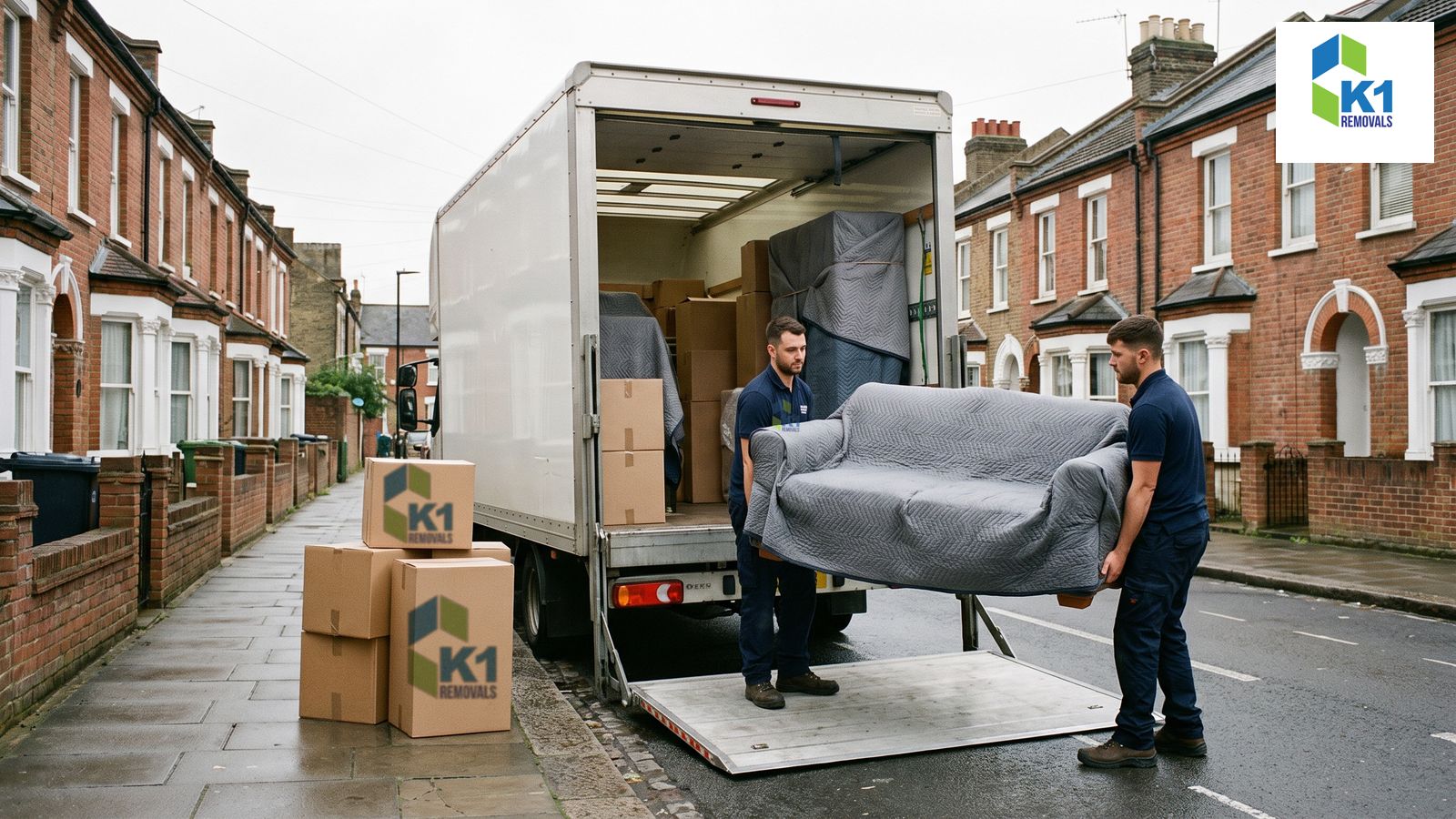
Moving home from London to Spain takes more planning than a move across town. Your belongings will travel a long way by road, cross the Channel and arrive at an address that may sit on a narrow street or several floors up in a shared building. This guide walks through removals London to Spain step by step, from the first survey to the last box unpacked in your new home.
If you’re still sorting out the admin side, such as residency, registering locally and other paperwork for yourself, start with our moving from London to Spain checklist. Here we focus on getting your furniture and belongings there safely.
Step 1: Book a survey early
Every international move starts with a survey. A surveyor visits your home, or walks through it with you on a video call, to see what’s going and what’s staying. That tells us the volume of your belongings, how much packing is needed, which items need special care and what access is like at the London end.
It’s worth booking the survey as soon as you have a rough moving window. Mention anything awkward, such as a piano or items in a loft or garage, and what you plan to sell or give away. The more accurate the survey, the better your quote and plan.
Step 2: Dedicated vehicle or shared load?
For removals to Spain there are two main ways your belongings can travel:
- Dedicated vehicle. A lorry carries only your household, loaded in London and driven to your Spanish address on dates agreed with you. This suits full-home moves and fixed dates.
- Shared or part-load. Your belongings share space on a vehicle with other customers’ consignments heading in the same direction. This can suit smaller moves, such as a flat or a few rooms of furniture, when you can be flexible about dates.
The best choice depends on how much you are moving and how flexible your dates are. Your surveyor will recommend the one that fits.
Step 3: Packing and the inventory
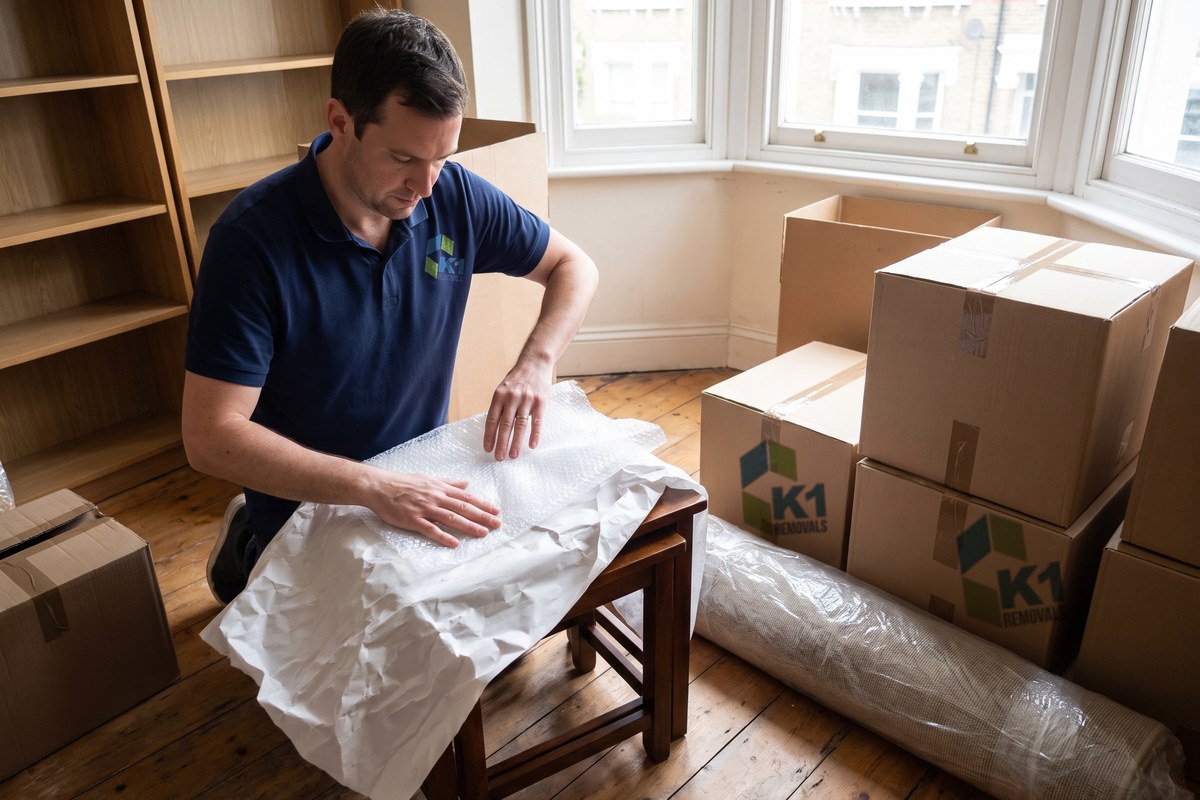
A long road journey means more handling, more vibration and more time in transit than a local move, so packing matters. Professional export packing uses strong double-wall boxes, plenty of paper and bubble wrap, quilted blankets for furniture and custom protection for fragile or valuable pieces such as mirrors, artwork and glass tabletops. If you’d like to pack some items yourself, our packing tips for moving house will help.
Alongside packing comes the inventory: a numbered list of every box and item, with a short description of its contents. It’s used to check everything off at delivery and is normally needed for customs paperwork. Be specific; “kitchen: plates and bowls” is more helpful than “kitchen items”.
A few things to sort out before packing day:
- decide what goes with you, what goes into storage and what you’ll sell or donate;
- keep passports, documents, keys, medication and valuables with you rather than on the lorry;
- check with your remover about items that may be restricted, such as flammables, gas bottles and certain plants or foods;
- defrost fridges and freezers and drain fuel from garden machinery.
Step 4: Paperwork for your household goods
Since the UK left the EU, moving household goods to Spain is an export from the UK and an import into Spain, so customs documentation is usually involved. Whether you can bring your belongings in without paying duty generally depends on your circumstances, such as your residency status and how long you’ve owned and used the items, and on the supporting documents you can provide.
Rules and forms can change, so always check the latest guidance on official UK and Spanish government websites, and ask your remover what they need from you and when. In practice, you’ll usually be asked for copies of your identity documents, details of your Spanish address and a signed inventory. Having these ready early helps avoid delays.
Step 5: The journey to Spain
Most London to Spain removals go by road. After loading, the vehicle crosses the Channel, usually by ferry or the Channel Tunnel, then drives south through France to Spain. Some routes use longer ferry crossings direct to northern Spain, depending on your destination.
Journey times vary with the distance, the route, border checks, driver hours rules and whether your load is dedicated or shared, so treat any timescale as an estimate rather than a fixed promise. Your remover should give you a planned delivery window and keep you updated while your belongings are on the road.
Step 6: Delivery in Spain

Delivery is where Spanish homes can differ most from London ones, so it pays to plan ahead:
- Apartments and lifts. Many people moving to Spain buy or rent an apartment. Lifts in older buildings can be small, so larger furniture may need to go up the stairs or, in some cases, be hoisted to a balcony.
- Narrow old-town streets. Historic town centres and hillside villages often have narrow or pedestrianised streets where a large lorry can’t reach the door. Belongings may need to be moved to a smaller vehicle nearby, or carried the last stretch.
- Parking and local permissions. Some town halls require permission to park a removal vehicle or occupy the street. Your remover will advise whether this applies to your address.
- Comunidad rules. Apartment buildings are usually run by a community of owners, the comunidad de propietarios, which may have rules on moving times, use of lifts and protecting shared areas. Ask the building administrator or your landlord early.
Step 7: Unpacking and settling in
On delivery day, the crew carries each item to the room you choose, reassembles furniture that was taken apart and checks items off against the inventory. If you’ve booked an unpacking service, they’ll also unpack boxes onto surfaces and take away the packing materials.
If your Spanish home isn’t ready yet, or you’re renting before you buy, part of your household can stay in secure storage in the UK and be delivered later.
Frequently asked questions
Should I choose a dedicated vehicle or a shared load to Spain?
A dedicated vehicle carries only your belongings on a timetable agreed with you, which suits full-home moves and fixed dates. A shared or part-load service combines several customers’ consignments on one vehicle, which can suit smaller moves when you have some flexibility on collection and delivery dates. Your surveyor can explain which option fits your volume and timescale.
What paperwork is needed for household goods going to Spain?
Since the UK left the EU, household goods moving to Spain may need customs documentation, and any relief from duty usually depends on your residency status and the supporting documents you can provide. Requirements change, so check official UK and Spanish government sources and follow your remover’s guidance on the inventory and forms needed.
Can you deliver to an apartment in a narrow old-town street?
Usually, yes, but it needs planning. Where a large lorry cannot reach the door, belongings can be transferred to a smaller vehicle nearby and carried the final stretch. We check access, lift sizes, stairs and any local or building restrictions in advance so the delivery day runs smoothly.
Can some of my belongings go into storage while I settle in Spain?
Yes. Many people store part of their household in the UK while they find a long-term home in Spain, then have it delivered later. Items going into storage are packed and listed on the inventory just like the rest of the move, so you always know what is where.
Removals from London to Spain with K1 Removals
K1 Removals is an established removals company handling domestic, international and commercial moves across the whole of the UK and abroad, with insurance cover up to £1m. For moves to Spain, our uniformed crews survey your home, pack and inventory your belongings, plan the route and timings, and deliver to your new address, whether that’s a villa on the coast or an apartment in an old town. Find out more about our removals from London to Spain service.
Planning your move from London to Spain? Book a free survey and get a tailored quote or call 0330 103 0041.